
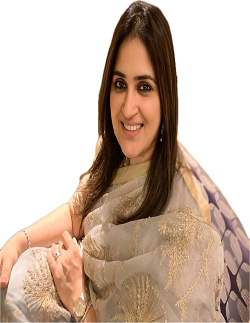
Mrs.Shraddha Murdia
Founder, Kashti Foundation
When I sit with young girls in government schools of Rajasthan, I see two Indias. One India still carries memories of cruelty: women burnt in dowry fires, acid attack survivors forced into silence, daughters denied birth itself through female foeticide, and the haunting stories of rape victims who could not find their voice. The other India is rising with courage and confidence, supported by reforms, policy, and a collective will that is slowly bringing women out of the shadows.
Women empowerment today is no longer an abstract idea. It is visible in laws, in classrooms, in households, and in the inspiring lives of millions of women who are rewriting India’s story.
Naari Shakti in Today’s Age
The word Naari means woman, while Shakti signifies divine energy, strength, and resilience. In India’s civilisational thought, Naari Shakti has always meant more than physical power. It represents the sacred force of creation, compassion, and sustenance. The scriptures affirm, “Yatra naaryastu poojyante ramante tatra devataah” — where women are respected, divinity flourishes.
In today’s India, Naari Shakti is evident not only in families and communities but also in boardrooms, laboratories, sports arenas, and parliaments. It is embodied by the young woman scientist who contributed to Chandrayaan-3, the tribal entrepreneur who transforms her village through self-help groups, the mother balancing work and care with grace, and the legislator shaping policies of justice.
Law and Dignity
The Nari Shakti Vandan Adhiniyam, 2023 marks a historic milestone. For the first time, one third of seats in Parliament and state assemblies will belong to women. This is not just representation but participation at the highest level where decisions that affect millions are taken.
Legal reforms have also reshaped dignity. The Bharatiya Nyaya Sanhita has modernised protections against sexual offences and trafficking. The Triple Talaq Act ended the practice of instant divorce, restoring justice and security to Muslim women.
In Uttar Pradesh, Mission Shakti now provides widows and divorced women with financial assistance, skills training, and opportunities for self-employment. This initiative acknowledges that empowerment requires economic independence as much as social recognition.
Every Girl’s First Cry
For centuries, the cry of a newborn girl was met with silence or regret. Today, that story is changing. The sex ratio at birth has improved from 919 in 2015 to 929 in 2021. The improvement is modest but meaningful, signalling that families are gradually welcoming daughters with greater acceptance. The campaign Beti Bachao, Beti Padhao has been crucial in spreading this awareness to villages and cities alike.
Health and Motherhood
India’s maternal mortality ratio has declined from 130 to 88 in less than a decade. Each number represents a mother returning home alive to hold her child. Schemes such as Pradhan Mantri Matru Vandana Yojana and Poshan Abhiyaan have reached households where nutrition was once scarce, ensuring that safe motherhood is a right, not a privilege.
Education and the Spark of Dreams
The transformation is equally visible in education. Today, nearly forty percent of India’s STEM graduates are women, placing the country among the global leaders. In villages, I meet girls who solve mathematics problems under a neem tree or practice calligraphy in our Kashti art sessions. They are proof that education remains the most powerful weapon of empowerment.
Economic Voice
Economic independence is the foundation of dignity. Women’s labour force participation has risen from 21 percent in 2017 to over 35 percent in 2023. Nearly 29.5 crore women now hold Jan Dhan accounts, and almost seventy percent of Mudra loans have gone to women entrepreneurs. When women earn, entire families rise, and entire communities flourish.
Dignity in Daily Life
Empowerment is also found in the everyday details of life. More than 11 crore toilets under Swachh Bharat and 10 crore LPG connections under Ujjwala have transformed women’s lives in ways that are rarely captured in statistics. A toilet is not only privacy but also safety. An LPG cylinder is not only convenience but also hours of freedom from drudgery and smoke. Both together are dignity.
Stories of Courage
India today is filled with women who are not merely recipients of empowerment but leaders of change. Kalavati Devi built thousands of toilets in Kanpur and gave dignity to her city. Padala Bhudevi lifted tribal women into entrepreneurship. Malvika Iyer, who lost both hands in a blast, became a global voice for disability rights. Sunita Kamble trained hundreds of women in goat rearing to combat drought and hunger. Sudarshana Dravid has taken India’s clean energy vision to the United Nations. These stories illuminate what women empowerment truly means.
Leadership for Women
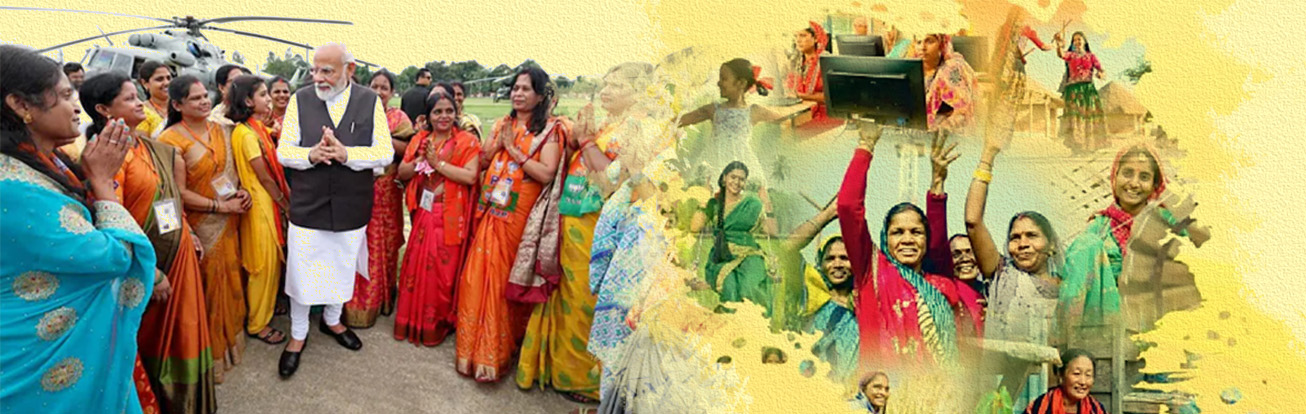
Prime Minister Narendra Modi has often affirmed that the future of India rests on the strength of its women. Each International Women’s Day, he hands over his social media accounts to inspiring women achievers, amplifying their voices across the nation. His government has anchored large-scale initiatives that link dignity with development, ensuring that women remain central to India’s growth story.
A Personal Note
As the Founder of Kashti Foundation, I witness these changes in the eyes of rural girls when they sing, when they paint, when they debate, and when they dare to dream. Women empowerment is no longer a distant slogan. It is a river gathering force, carrying stories of pain, resilience, and hope.
This river cannot be stopped. It is India’s destiny. For the first time, the nation is truly listening to its daughters. And Kashti pledges to be a vessel that carries this Shakti forward.